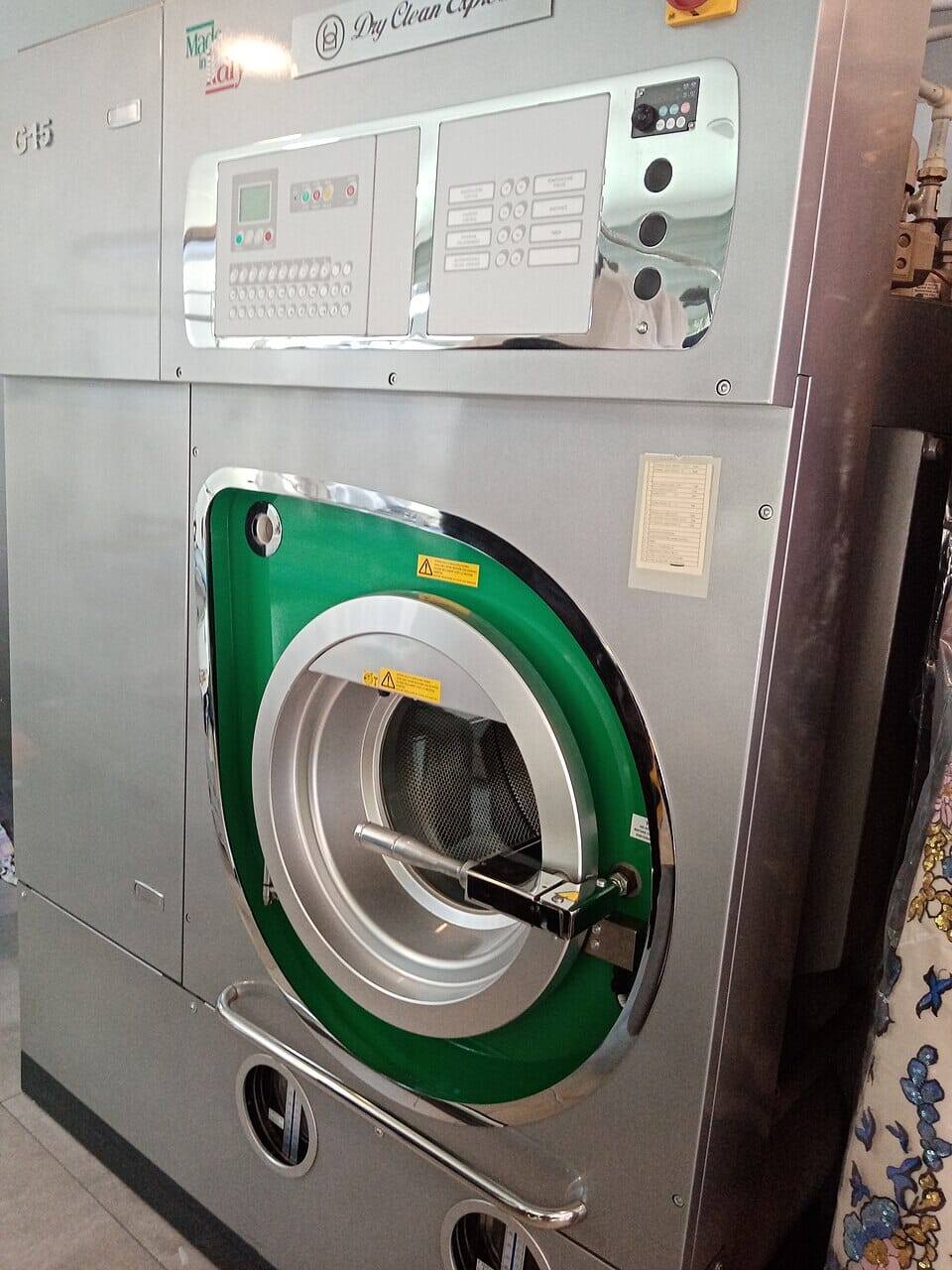
Dry cleaning is one of those things most people use without giving much thought to how it works. You drop something off, it comes back in a plastic bag, smelling faintly of something you can't quite name. Job done.
But understanding what's actually happening to your garments – and what the process can and can't do – changes how you think about when to use it, and when to look for something else.
The name is wrong
Dry cleaning is not dry. It uses liquid – just not water.
The process looks more like a washing machine than most people expect. Garments go into a drum. The drum fills with solvent. It agitates, spins, and then – because solvent is expensive and can't simply be discharged — the machine heats the drum to evaporate the solvent, captures the vapour, and condenses it back into liquid for the next load. The garments come out feeling dry because they were never wet in the conventional sense. But they've been through a liquid cleaning process all the same.
The solvents
The original dry cleaning solvent was perchloroethylene, known as PERC. It became the industry standard through most of the twentieth century because it's exceptionally effective at dissolving grease and oil-based contamination.
It's also a probable human carcinogen.
Many dry cleaners have moved away from PERC. The most common alternatives are hydrocarbon solvents (petroleum-derived, less aggressive than PERC but still effective on oils) and silicone-based fluids, sometimes marketed under trade names that make them sound considerably more exotic than they are. These are generally considered safer in terms of direct health risk, though they carry their own environmental disposal challenges.
All of them work on the same principle: dissolve oil-based contamination in a solvent, remove the solvent, return the garment.
What dry cleaning does well
It's worth being clear about this, because dry cleaning has a genuine use case.
Oil-based soiling (grease, wax, lipstick, oil-based makeup, certain food stains) dissolves readily in solvent. Water doesn't shift these effectively; solvent does. For structured garments like unlined wool suits, where water exposure could cause the fabric to distort or the lining to pucker, dry cleaning is often the right answer. It cleans without introducing the water that causes these problems.
For the right garment with the right kind of soiling, it works as intended and has done for over a century.
What dry cleaning doesn't do
Here's the problem: solvent dissolves oil. It doesn't dissolve water-soluble compounds.
And most of what's actually in worn clothing is water-soluble. Sweat. Body salts. Deodorant residue. Water-based makeup. The biological matter that accumulates in fabric during everyday wear, and especially during physical activity.
These compounds don't move in solvent. They stay in the fabric. A garment that goes through dry cleaning comes out with the oil-based surface contamination removed – and everything else still present, sitting in the fibres.
Over repeated dry cleans, water-soluble residues build up. Salts from sweat crystallise in the weave. Deodorant compounds accumulate around the underarm area. The result, over time, is fabric that looks clean but isn't – and that carries a progressive deterioration in the form of stiffening, odour that returns quickly after cleaning, and fabric damage that's slow enough to be easy to blame on age rather than cleaning method.
The effect on specific materials
For everyday fabrics (cotton, polyester, standard wool) dry cleaning's limitations are a slow-burn problem rather than an immediate one. For costumes and performance wear, the issues are more acute.
Adhesives. Many embellishments on costumes – rhinestones, sequin panels, decorative trim – are heat-set or glued rather than sewn. The solvents used in dry cleaning can attack certain adhesives, causing stones to cloud, lift, or drop entirely. This varies by adhesive type and solvent, so it's not universal. But it's a real risk.
Metallic and iridescent finishes. Metallic threads, iridescent coatings, and foil-effect fabrics can dull or lose their finish after solvent exposure. Again, not certain – but often enough to be a genuine consideration.
Elastane. The stretch fibre present in most modern dancewear and performance costumes. Repeated solvent exposure gradually degrades elastane, reducing its recovery and eventually its stretch. This is a slower process than water-based damage to elastane from incorrect washing temperatures, but it accumulates in the same way.
Heat-sensitive embellishments. The heat recovery stage of the dry cleaning process – where the machine heats the drum to evaporate the solvent – exposes garments to elevated temperatures. For most fabrics this isn't a problem. For heat-sensitive materials including some thermoplastic embellishments and certain synthetic fabrics, it can be.
The environmental picture
Solvent-based cleaning carries a more significant environmental footprint than water-based alternatives. PERC is a persistent environmental contaminant; contaminated sites around former dry cleaning premises are a documented problem in many countries. The alternative solvents are generally less persistent but still require careful disposal and are derived from petroleum.
Solvent recovery within the machine reduces (but doesn't eliminate) emissions. Residual solvent in returned garments gases into the air where it's stored, and in the home.
None of this makes dry cleaning categorically unacceptable – for some garments there isn't a better option – but it's part of the calculation.
When dry cleaning is still the right choice
An honest account of dry cleaning has to include this. Some garments genuinely need solvent-based cleaning:
- Heavily structured pieces with internal boning, wiring, or complex construction that would distort with water exposure
- Certain vintage garments with unstable dyes that aren't colourfast in water
- Some woven wool fabrics, particularly in unlined tailoring, that are prone to water distortion
- Oil-saturated or heavily grease-stained items where solvent cleaning is simply more effective
A good cleaner will tell you which category your garment falls into before it goes near a machine.
The "dry clean only" label
Care labels are a manufacturer's instruction, but they're also a liability position. "Dry clean only" on a label doesn't always mean the garment will be damaged by water – it often means the manufacturer doesn't want to be held responsible for the results of home washing. The two things aren't the same.
Professional wet cleaning, which uses water in a carefully controlled process with appropriate chemistry, can safely clean the majority of garments labelled "dry clean only." The label was written with domestic machines in mind. A professional process – with the right equipment, the right detergents, and the right cycle – is a different thing entirely.
If you want to understand how professional wet cleaning works as an alternative, we've written a full explanation here.